
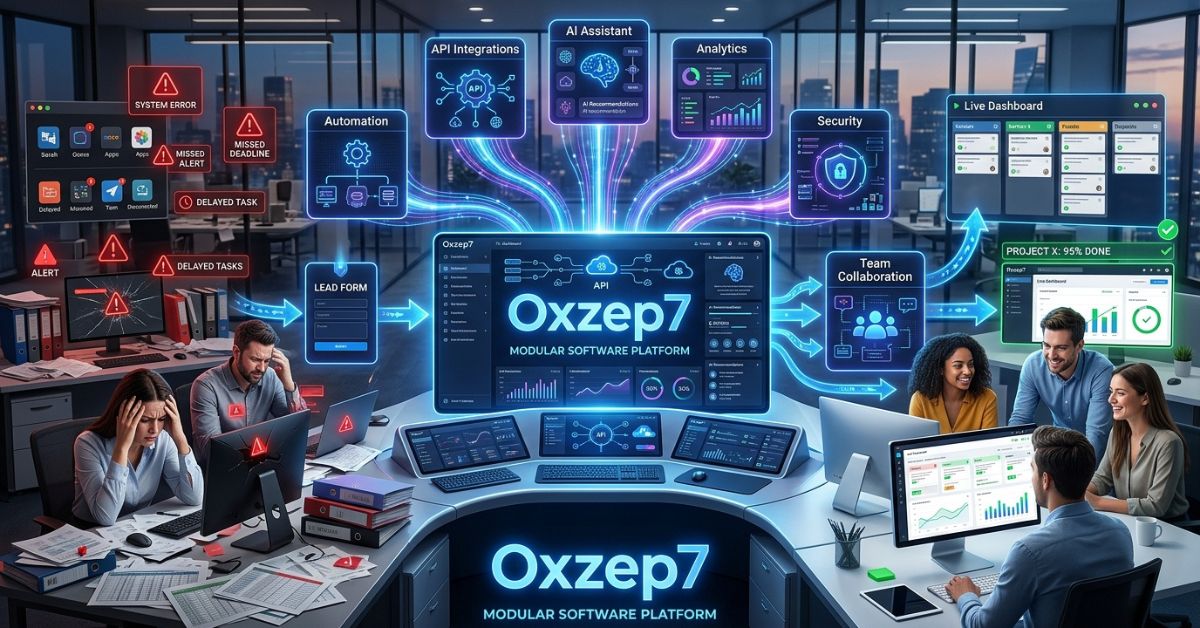
When you develop Oxzep7 software, you build a system that helps teams manage work, link tools, and automate tasks. This guide shows what Oxzep7 is, how to build it, which tools to use, and how to launch it. It is written for founders, developers, and business teams who need a better way to handle projects.
What Is Oxzep7 Software?
Oxzep7 is usually described online as a category term for modern modular productivity and automation systems, rather than a single product. It helps teams keep work, tools, and data in one place.
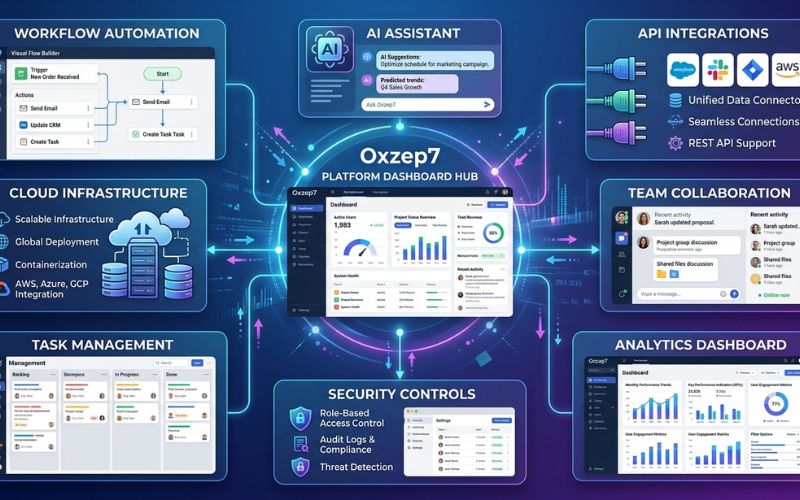
The four main parts are:
- Modularity: Add or remove features without changing the core system.
- Automation: Let the software handle repeat work.
- Connections: Link with other tools through APIs.
- Growth: Keep working as your team and data increase.
Why Teams Build It
Business goals
Teams build Oxzep7 software to save time, reduce manual effort, and centralize operations. It helps teams share updates and make tools for special needs.
Technical goals
- Flexible structure: Easier to update when the team grows.
- Linked tools: Different apps can talk to each other.
- Cloud support: Works well on cloud servers.
- Safety rules: Keeps data protected at all times.
Core Features
Modular system design
A flexible structure helps the system stay easy to update as the team grows. This allows you to scale parts of the app without needing to redo the whole design.
Workflow automation
- Repeat work: Automatically process emails, reports, and data logs.
- Rule-based triggers: Perform actions when specific conditions are met.
- Team process flow: Move tasks between members without manual steps.
Example Workflow
A sales form is submitted, the system creates a task, sends a team alert, updates the dashboard, and marks the project as started. This keeps the whole team in sync without human help.
AI-assisted operations
The system can use data to suggest next steps and warn teams about problems early. It helps teams decide what to do next based on current project data. For example, it can flag a late task before the deadline passes.
Collaboration and dashboards
Dashboards show live work, task status, and progress in one view. A small company may use it to track requests, while a larger team may use it to connect dashboards, alerts, and approvals.
Real-World Use Cases
Oxzep7 helps different teams in various ways:
- For Sales: Automates lead tracking and follow-up emails.
- For Support: Routes customer tickets to the right agent automatically.
- For Inventory: Updates stock levels when a sale happens in real-time.
Best Tech Stack
- Backend: Python is good for simple builds. Java works well for large systems. Node.js is useful when you need fast, live updates.
- Frontend: React is a strong choice for dashboards. Vue and Angular also work well for app screens.
- Data Layer: Use PostgreSQL for structured data. Use MongoDB for flexible data that changes often.
- Infrastructure: Use Docker to keep the app portable. Use Kubernetes if you need many containers. Use AWS or Azure for hosting. Add CI/CD to test and ship updates faster.
Deployment Options
- Cloud deployment: Best for small teams who want fast setup and low cost.
- Hybrid setup: Uses both cloud and local servers for better data control.
- On-premise setup: Best for large teams with strict privacy or data laws.
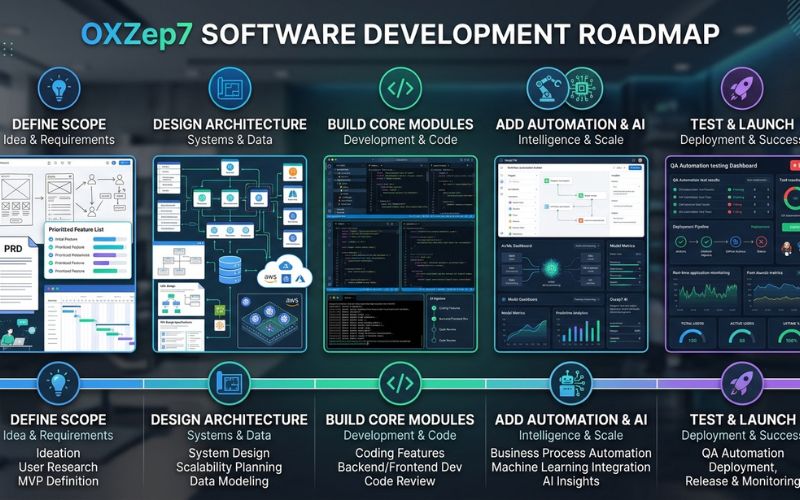
How To Develop It
Define the scope
Start with one problem. Define the users and keep the first version small.
Design the architecture
Choose a simple structure first. Plan how tools connect and how data stays safe.
Build the core modules
Build login, dashboard, task steps, and tool connections first.
Add automation and AI
Use triggers that start actions when something changes. Add AI only where it helps.
Test and launch
Test each part, then test how the parts work together. Check speed before launch.
Common Integration Problems
- Data mismatch: Sometimes tools speak different “languages.” Use a bridge layer to fix this.
- Slow APIs: If a tool is slow, your system will feel slow. Always test API speed early.
- Connection breaks: APIs change sometimes. Set up alerts to know if a link stops working.
Security Requirements
Encryption
Use TLS for data in transit and encrypt stored data too. This keeps private information safe.
Access control
Use role-based access so people only see what they need. For example, a worker should not see admin settings.
Compliance
Keep logs of important actions and watch for problems early.
Launch Checklist
- Check login: Test the sign-up and login process.
- Test every button: Click every link to ensure it works.
- Confirm permissions: Check that users cannot access the wrong data.
- Load-test: Test main pages to ensure they can handle traffic.
- Fix errors: Find and remove bugs before you go live.
Business Case And ROI
Cost categories
- Development: Pay for engineers and designers.
- Hosting: Monthly server fees.
- Training: Time to teach staff the system.
- Maintenance: Fees for updates.
Value categories
- Time savings: Less manual work for the team.
- Fewer mistakes: Automation lowers human error.
- Faster releases: New features go live sooner.
- Better retention: Teams and users stay happier.
Risk control
Stick to the plan, test connections early, and keep some budget for surprises.
Common Mistakes
- Building too much: Many teams fail because they try to build too much at once.
- Weak architecture: A lack of flexibility makes it hard to update or scale.
- Ignoring adoption: If you do not train your team, they will not use the system.
Future Roadmap
- Month 1–3: Build the core login and basic task flow.
- Month 4–6: Connect your first three tools via API.
- Month 7+: Add AI features and expand to more team members.
Key Takeaways
To build Oxzep7 software well, start small, keep the system flexible, and plan your connections early. Focus on safety, growth, and a clean first version.
What industry are you building for? Share your use case in the comments.
People Also Ask Answers
Is Oxzep7 software real?
Oxzep7 is usually described online as a concept for modular business software, not one fixed product.
What language is best to build it?
Python and Java are common choices because they work well for business apps and automation.
How long does it take to build?
A small MVP may take 3 to 6 months. Bigger versions can take longer.
Can it work with existing systems?
Yes, it can connect to older tools through APIs and a bridge layer.
Is it cloud-based?
It is often built for cloud use, but some teams also use hybrid or on-premise setups.
Can I build this without a big team?
Yes, using modular tools and cloud platforms allows small teams to build effective systems.
You May Also Like:
Tech Hacks PBLinuxGaming: Simple Linux Gaming Fixes for Better Speed
InstaPV Review 2026: User Trends, Popularity, and Market Analysis
Disclaimer
This article is for informational and educational purposes only. It is not professional advice. Some images are AI-generated for illustrative purposes. All trademarks and registered copyrights belong to their respective owners. Please consult with a qualified professional before making any technical or business decisions based on this content.

Eleanor Karen is an administrator at PVStory.co.uk who writes about digital tools, social media trends, and online resources. She shares helpful insights on Instagram Story Viewer tools and other web-based solutions, helping readers stay informed and make the most of their online experience.